
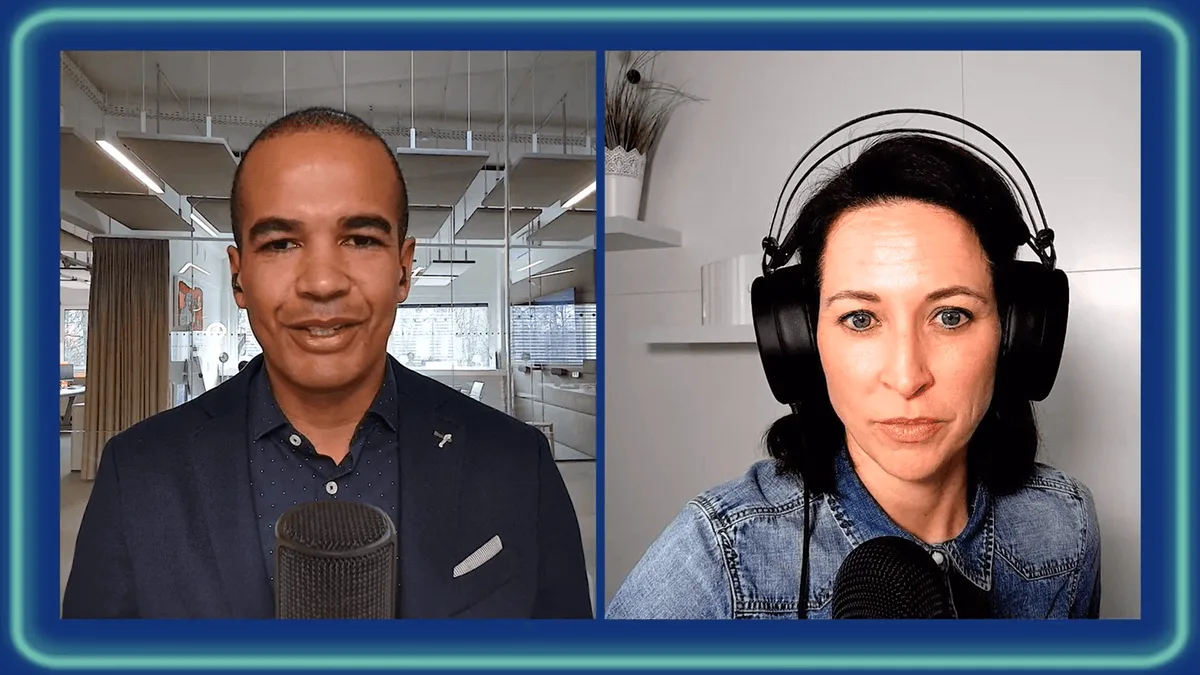
In this article: episode 1 of Beyond the Lab, in which Sylvia Orasche walks through the cosmetics industry surprises that shaped her career - and what those surprises mean for the future of in-store demos.
Sylvia Orasche has worked across formulation, claims and packaging for some of the most recognised brands in cosmetics. In the inaugural Beyond the Lab episode she takes the question “what shocked you most?” literally, walking through three observations that have stayed with her and that shape how we think about demo design at USP Demo Solutions.
How quickly trust evaporates
Sylvia’s first surprise was how rapidly a single misleading claim can damage a brand that took years to build. The lesson she draws is that demo design is risk management as much as marketing a credible, repeatable test is one of the cheapest insurance policies a brand can buy.
How under-used the in-store moment still is
Despite the rise of e-commerce, Sylvia points out that the physical store remains the highest-conversion environment in beauty. Yet most counters still rely on talking points rather than tangible proof. A small investment in a hand-held demo, she argues, can lift conversion in ways no amount of additional digital media can match.
How global teams under-estimate local nuance
What works as a demo in Tokyo will not necessarily land in São Paulo. Skin tones, ambient temperature, lighting and consumer expectations differ. Sylvia’s advice is to design demos with regional variation built in from the start, rather than retrofitting a global tool market by market.
For more episodes in the series, see What is a Demo? with Niccolò Palazzoni.
What this means for retail planning today
Even now that stores are open again, the lesson from this episode still applies: any activation that depends on a single channel is one disruption away from being silent. The practical move is to design every demo for at least two channels from day one, in-store and digital, or in-store and direct-to-creator, so the brand never has to choose between presence and silence when conditions change.
A simple way to operationalise this is to ask, for every demo brief, "if the store closed tomorrow, what would we do with this asset?" If the answer is "nothing", redesign it. The same physical demo that works at counter should produce a kit a creator can use at home, a livestream prop a host can hold up on camera, and a training tool a beauty advisor can take to a private event. Once a demo is designed to travel, the activation calendar becomes far more resilient and far cheaper to run.
A useful exercise for any brand team this quarter is to run a "channel outage" tabletop. Pick one channel at random, retail, e-commerce, sampling, livestream, and walk through what would happen to the current activation calendar if that channel disappeared next week. Most teams discover that one or two assets are doing too much work, and a small redesign would dramatically reduce the brand's exposure to any single channel going dark.
The wider lesson is that resilience is a design choice, not a contingency plan. Demos that travel across channels, kits that work in any room, protocols that survive a different operator, all of these are decisions made at the brief stage, long before any disruption shows up. Brands that treat resilience as a baseline requirement rather than an emergency response end up with activation calendars that simply keep running while competitors scramble, and that quiet reliability is one of the most under-rated forms of competitive advantage in the category.
One final operational note: keep a small inventory of "channel-agnostic" demo kits ready to ship, even when there is no immediate disruption on the horizon. The cost of holding the inventory is trivial relative to the cost of being silent during a sudden channel shutdown, and the same kits double as creator seeding packs and event take-homes during normal operations. Preparedness in this category almost always pays for itself before it is ever called on as a contingency.