
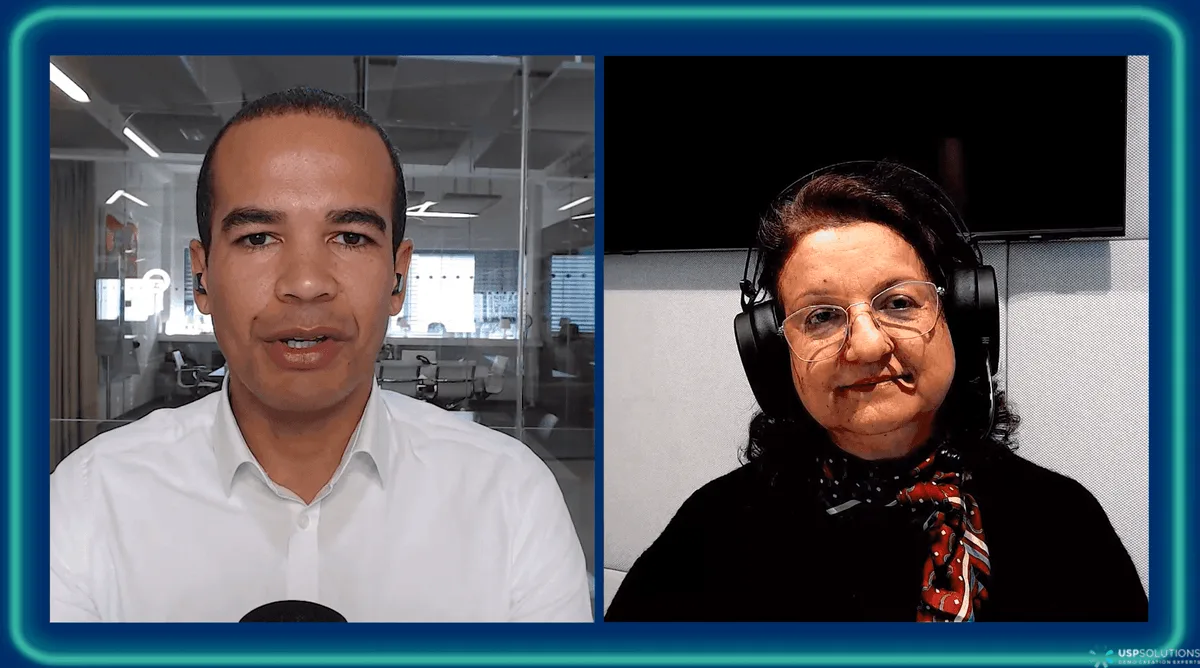
In this article: episode 4 of Beyond the Lab, in which Janat Soomro asks what brand engagement today actually looks like and where product demos fit in.
Janat Soomro, VP of Demo Development at USP Demo Solutions, opens this episode with a blunt observation: most brand engagement metrics measure attention, not belief. Views, dwell time and likes are easy to count, but none of them tell you whether a consumer trusts the product enough to buy it again. That gap is what demos are designed to close.
Engagement vs. conviction
Janat draws a clear distinction between an engagement moment (a scroll-stopping piece of content) and a conviction moment (a hands-on test that produces a visible result). Both matter, but they have different jobs. Engagement creates the opportunity. Conviction closes the loop.
What modern engagement looks like
The most effective campaigns Janat has worked on layer the two. A short video on TikTok introduces the claim, a QR code on pack invites the consumer to try a small at-home test, and a follow-up retail experience confirms the result with a beauty advisor. Each step reinforces the previous one and builds toward a purchase decision the consumer feels they made themselves.
Demo design implications
Designing for this layered journey changes the brief. Demos need to work as a 5-second hook on social and as a 30-second guided test in store. They need to photograph well, be safe to handle, and produce a result that is identical across markets. That is the discipline our team brings to every engagement.
For a complementary view on how demos drive trust, see our piece on live demos and consumer trust.
What to take into your next planning cycle
The practical takeaway from this conversation is to add a "conviction metric" alongside your engagement metrics in the next planning cycle. Pick one: repeat purchase rate within 60 days, unaided recall of the product mechanism, or share of consumers who can explain the claim back in their own words. Any of these tells you whether your engagement is converting into belief, which is what demos are designed to drive.
From there, look at the assets you already have and ask which ones actually create conviction versus which ones only create attention. The honest answer usually surprises teams. Pretty videos with high view counts often score low on conviction, while a simple, repeatable demo filmed once and reused across channels often scores high. Re-weighting your content investment toward conviction-creating formats, even by a small amount, is the cheapest way to lift the metrics that actually move the business.
The other point worth carrying back into the office is the role of in-person moments as the seed for digital content. A single retail demo, filmed once and edited into a handful of short clips, often outperforms a campaign built entirely from studio production. The reason is simple: the in-person demo carries the unscripted reactions and small imperfections that audiences read as proof. Treating retail activations as content shoots, not just as sampling moments, is one of the highest-leverage shifts a brand can make in the next 12 months.
Finally, it is worth challenging the default reporting cadence. Engagement dashboards refresh weekly because the platforms make that easy, not because weekly is the right rhythm for measuring belief. A quarterly conviction read, paired with the weekly engagement view, gives leadership a far more honest picture of brand health and prevents the team from chasing short-term attention spikes at the cost of the longer arc that demos are designed to support.
One last operational note: brief the agency partners on the conviction metric the same way the brand team is briefed on it. Most engagement plans drift back toward attention metrics because that is what the agencies are optimised to report. Naming the conviction metric in the SOW, and tying part of the success review to it, is what keeps the work pointed at belief rather than at clicks over the lifetime of the engagement.