
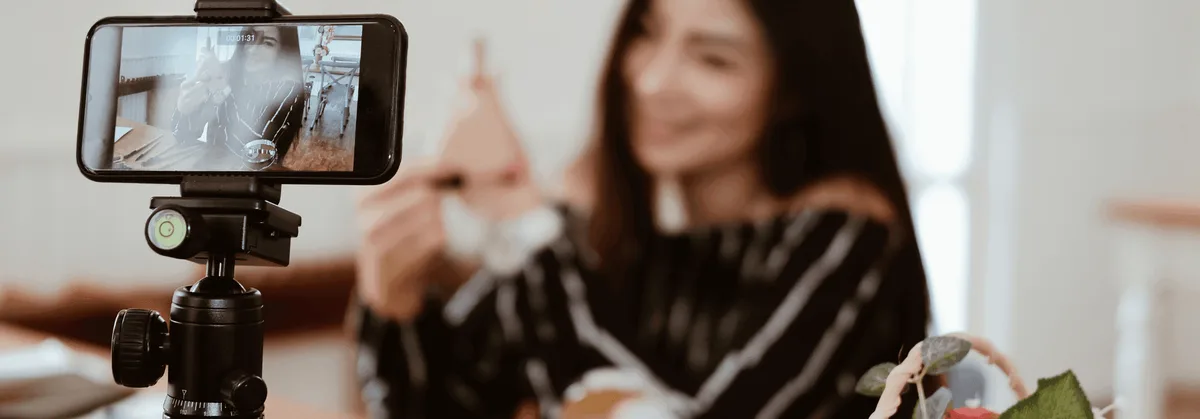
In this article: how to think about social creators as an engine for word-of-mouth in cosmetics, including the three components - reach, original content and consumer trust - that decide whether the spend earns its keep.
This article is about word-of-mouth strategy in cosmetics specifically, and the role social creators play as an earned-media channel rather than as another paid placement. The framing matters because the two require very different briefs, success metrics and creative guardrails - and conflating them is the most common reason creator spend underperforms.
Consumers in our category have largely tuned out traditional advertising. They look at peers, recommendations and daily routines instead. The opportunity is to design a programme where the marketing message lives natively inside that organic surrounding, in a way that keeps compounding even after media spend stops.
HOW TO INFLUENCE INFLUENCERS?
When it comes to influencer marketing, marketers take advantage of paid as well as unpaid social influencers. However, there are three main components:
- Social reach: Through outlets such as blogs and other social channels, influencers reach an extensive range of consumers.
- Original content: Influencers produce original content for the brand. Often this content is quite effective.
- Consumer trust: Influencers tend to build strong relationships with their audience. This organic process enables the audience to trust the influencer’s opinions.
“For the visionary marketer, the rise of the social media influencer creates a world of possibilities. It opens up a new channel for brands to connect with consumers more directly, more organically, and at scale.”**
The power of Influencer marketing lies in increased consumer retention. A study by McKinsey found that “marketing-induced consumer-to-consumer word of mouth generates more than twice the sales of paid advertising”.
As a marketer in the cosmetics industry social media channels, and in that respect especially Instagram, are powerful tools. However, there are some challenges you may face: How can I ensure content quality and content accuracy? How to make the most out of my campaign in terms of engagement rate, likes, shares, and comments.
*https://en.wikipedia.org/wiki/Influencer_marketing
**http://www.adweek.com/socialtimes/10-reasons-why-influencer-marketing-is-the-next-big-thing/623407
How to make the impact measurable
To turn influencer impact from a feeling into a number, define one conviction metric per campaign before the first piece of content goes live. Options include unaided recall of the product mechanism, share of consumers who can explain the claim back in their own words, and 60-day repeat purchase rate among consumers who saw the content. Pick one, instrument it, and refuse to change it mid-flight, because the lift from a campaign is only visible if the baseline was set before it ran.
Operationally, this also means casting creators for fit with the demo, not just fit with the brand. A creator whose audience trusts them on skincare is a different asset from one whose audience trusts them on beauty trends, and the same demo will perform very differently in each context. Match the demo to the creator's existing trust profile, and the social media campaign starts to compound on the credibility the creator has already built with their audience, rather than borrowing it for a single post.
It is also worth building a short post-campaign debrief into every creator engagement. A 30-minute call with the top two or three performing creators usually surfaces insights no dashboard captures, which moments their audience reacted to, which parts of the demo felt awkward, what they would change next time. That qualitative signal is often the highest-leverage input into the next round of briefs, and it costs almost nothing to collect compared to the value it returns.
The wider takeaway is that creator marketing is a long-game asset, not a short-term lever. The strongest brand-creator pairings show their full impact over several quarters, as the audience returns to the same creator for the same category and the brand becomes the assumed default. Planning creator partnerships on annual horizons, with renewals tied to conviction metrics rather than only to reach, produces a fundamentally different and far more durable kind of social media campaign than the project-by-project model most brands still default to.