
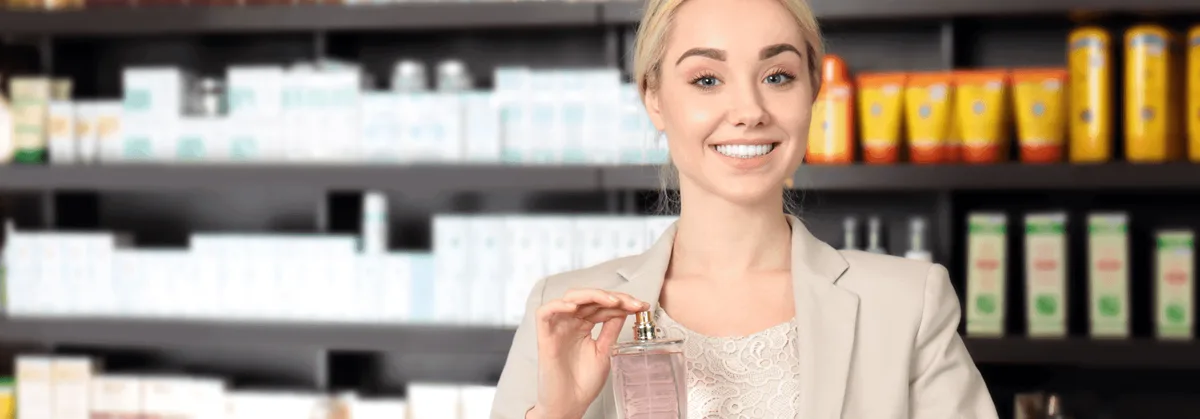
This article expands on our video conversation with Alma Alibegovic, VP of Demo Development, on why live consultation is still the strongest growth lever a beauty brand has.
Embedded Vimeo video is blocked
It stays hidden until you accept embedded media cookies.
In the video, Alma makes a deceptively simple argument: for all the money pouring into digital, the moments that most reliably move a beauty consumer toward purchase are still the moments where another person guides her through a product on her own skin. Live consultation, she argues, was the best way to boost business decades ago, and it still is. What has changed is how brands scale it.
Why personal interaction still wins in beauty
The conversation does not have to be long. A 90-second exchange around a single demonstration, a texture, a fragrance, a colour match, a skin reading, often carries more weight than weeks of advertising, because the consumer leaves with a personal experience rather than a remembered impression of a brand. That is the core point of the video: a live consultation creates a memory the consumer owns, and owned memories convert.
How to scale live consultation without diluting it
The scaling problem is real, no brand can put a beauty advisor in every shopper's hand. The answer Alma lays out is to design the consultation as a repeatable protocol, then equip every consumer-facing person, advisor, host, creator, sampling agent, with the same short demonstration. The protocol does the heavy lifting; the person delivers it. That is how prestige brands have quietly maintained the feel of personalised service while running these demos at meaningful scale across many channels at once.
Bringing the same energy into digital
The logic carries online. A livestream host running a diagnostic demo on herself recreates the live consultation at scale. A creator performing the same protocol on her own skin gives her audience a vicarious version of the in-store experience. A short video at the top of a product page that walks the shopper through a quick self-test does the same. None of these replace the in-person moment, but they share its DNA, which is more than most brand video manages.
How brand teams can apply this
Start by identifying the single point in the journey where a personal interaction would change the outcome most, usually the colour-match decision in makeup, the routine-build decision in skincare, or the fragrance-discovery decision in beauty. Build one short, repeatable consultation demo for that moment, train every channel to deliver it the same way, and measure first-purchase satisfaction before and after. The lift is almost always large enough to justify scaling the approach to the next high-leverage moment, and over time the brand acquires a recognisable personal voice wherever it shows up.
How to measure the impact
The impact of personal interaction is often dismissed as unmeasurable, which is why it loses budget battles to more easily quantified digital tactics. It is measurable, just not on the same dashboards. First-purchase satisfaction, 30-day return rates, unprompted brand mention in post-purchase surveys and 90-day repeat rate are all sensitive to the quality of the consultation at the point of decision. Instrument one or two of these around an activation and the lift usually makes its own case. Capture qualitative signal alongside the numbers, too: five-minute exit interviews surface the exact language consumers use to describe the experience, which is gold for future creative and training scripts. One last operational note from Alma, protect the time the consultation actually needs. A 90-second interaction needs 90 undivided seconds, which means staffing, queue management and till workflows all have to give the moment room to happen. That unglamorous discipline is the difference between a consultation that delivers its promise and one that quietly underperforms because nobody had time to run it.