
In this article: Redefining Demo Creation Expertise.
USP Demo Solutions, known as a trailblazer and acknowledged in the industry as the foremost Demo Creation Expert for brands in the FMCG and beauty industries, continues to set industry standards with its extensive consulting, ideation, development, and deployment of demo assets
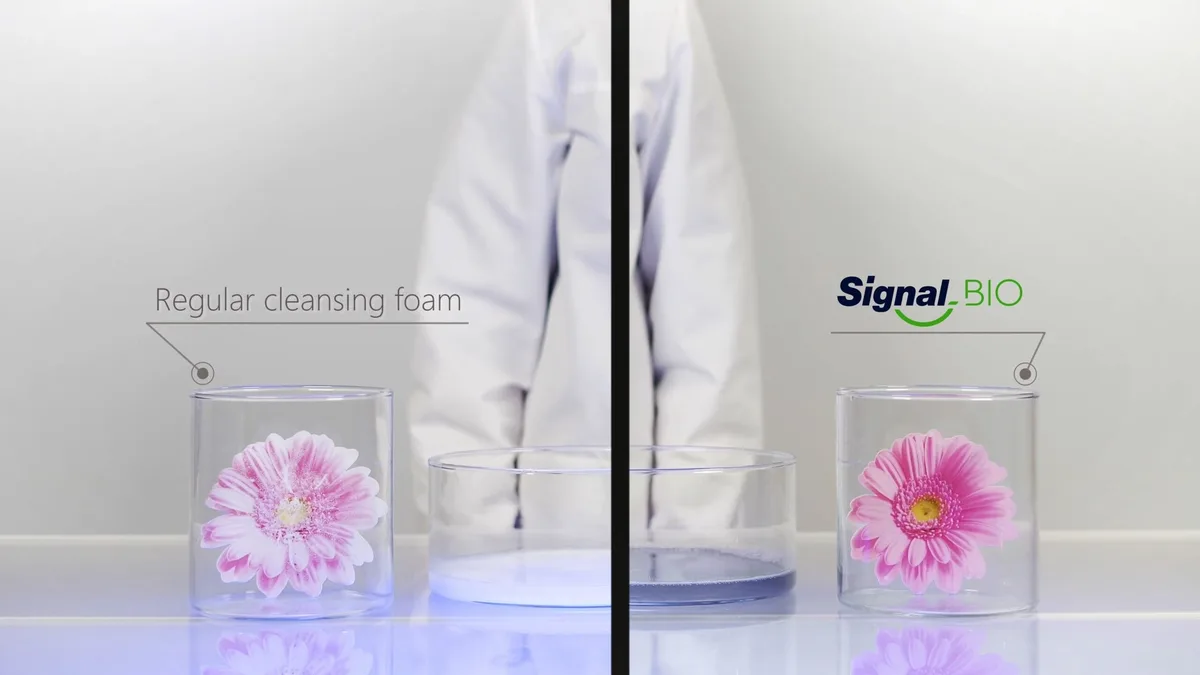
With a commitment to excellence, USP Demo Solutions creates engaging and scientifically backed demos that effectively showcase product claims in all mediums. Their recent successes include developing demos to prove the efficacy of facial cleansers, demonstrating the stain removal power of cleaning materials compared to the brand’s competitor, and highlighting the oral health benefits of mouthwash formulations. (Brand Project – RoC – Barrier Renew Efficacy Video / Brand Project – Handy Andy Probiotic Cleaner / Brand Project – Meridol Proof of efficacy).
“Our tailor-made demo solutions are designed to transform complex product science into compelling narratives that resonate with specific audiences, may they be consumers, influencers, or internal teams,” said Diego Kanda-Diwidi, CEO at USP Demo Solutions.
“By focussing on clear and demonstrable product benefits, we empower brands to convey their vision and build trust with their target audiences.”
USP Demo Solutions is always striving and at the forefront of innovation, developing tools that not only validate product claims but also elevate the roles of marketing and R&D professionals within organizations. Acting as a facilitator, this approach changes the paradigm of how brands communicate their value proposition, setting new benchmarks for success.
“The vision at USP Demo Solutions is to empower brands by solving communication challenges on consumer claims and benefits to inspire confidence and foster lasting consumer relationships.” added Kanda- Diwidi.
For more information about USP Demo Solutions and how they can elevate your brand’s demo strategy, visit usp.at
What this means for brand and R&D teams
For brand and R&D teams, the practical takeaway is that demo creation is now its own discipline, not a side output of an agency or a packaging supplier. If you are commissioning demos, treat the brief the way you would treat a clinical study or a pack design: define the claim, the channel, the regulatory boundaries and the rollout footprint up front, and expect the partner to push back on the parts that will not survive real use.
A useful next step is to audit the demos already in market under your brand. For each one, ask three questions: does it prove the claim it is paired with, is it the same demo across every channel where the product appears, and can a new market activate it without re-engineering? The gaps that surface in that audit are the brief for the next phase of work, and they are usually a much better starting point than "we need a new demo for the launch".
It is also worth treating demo creation as a long-term capability investment rather than a campaign expense. The brands that get the most from this discipline are the ones that build a small internal team responsible for the demo library, even when most of the work is outsourced. That internal owner protects the institutional memory, keeps demos updated as formulations evolve, and ensures the same proof points are reused across launches instead of being reinvented every cycle. Over two or three planning cycles, that single role typically pays for itself many times over.
The wider opportunity for the industry is to mature the language around demos. Treating "demo" as a single word that covers everything from a sampling sachet to a clinical visualisation hides too much complexity, and it makes briefs harder to scope. A shared vocabulary, mechanism demo, sensory demo, diagnostic demo, claim-substantiation demo, would help brand, R&D, regulatory and agency partners agree on what is being commissioned, and it would quietly raise the quality bar across the entire category.