
Every product has a story to tell.
Whether someone is standing in front of a retail shelf, scrolling through an online store, or watching a product video on social media, they make a decision almost instantly. Is this relevant? Is it different? Is it worth my attention?
You have 8 seconds. That's it. Those first few seconds often determine whether a product earns a second look or is forgotten altogether.
The Communication Challenge
For brands, this creates a communication challenge. The problem isn't a lack of innovation. It's that too many product benefits are difficult to understand. Years of research, clinical validation, and advanced technology are often reduced to technical claims that mean little to the average consumer.
People don't buy science. They buy what they think works for them.
A technical claim on a pack or a paragraph of scientific explanation is rarely enough. Consumers don't have the time, or the motivation, to decode complex language. They want to understand the benefit immediately.
This is where product demos make the difference.
Reveal the Benefit, Don't Explain It
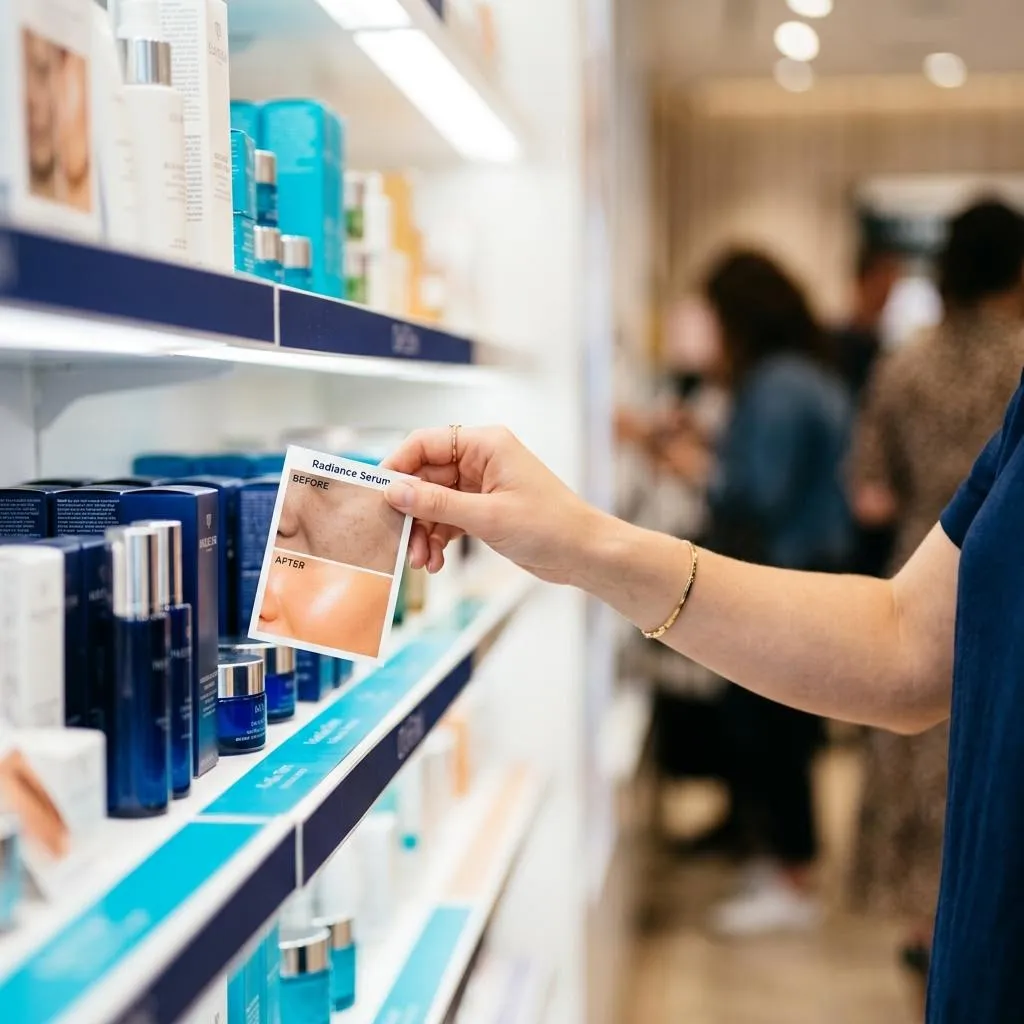
A great demo doesn't explain a benefit. It reveals it. It turns invisible science into visible proof, making complex claims simple, memorable, and believable in just a few seconds. Instead of explaining how an ingredient hydrates the skin or how a cleaning technology works, it lets people see the result for themselves.
That matters because our brains process images and experiences much faster than words. We naturally notice movement, contrast, and change. A visible transformation is easier to remember than a technical explanation, and far more likely to build confidence in a product.
Think about the demos that stay with you. They are usually simple, memorable, and instantly understandable. They don't always require a presenter to explain every detail. The proof is right in front of you.
Creating that kind of experience is not about making science less accurate. It's about making science more accessible.
When the Benefit Happens Below the Surface
This is especially important in industries such as personal care, home care, and healthcare, where many product benefits happen below the surface. Skin barrier repair, ingredient absorption, antibacterial protection, stain removal, or odour control are all difficult to communicate because the process itself isn't visible.
Without a clear way to demonstrate these benefits, even genuinely innovative products can appear no different from the competition. The shelf, the screen, and the social feed all flatten nuance: two products with very different science can look identical to a shopper in a hurry. A well-designed demo restores that difference by putting the evidence where the decision happens.
Demo Thinking Starts Earlier Than You Think
That's why demo thinking should begin much earlier than many organisations realise. When product developers, R&D teams, and marketers work together from the start, they can identify opportunities to capture the product's science in ways that people will immediately understand. Instead of trying to simplify a complex claim at the end of the process, they build communication into the innovation journey itself.
At USP Demo Solutions, this philosophy shapes every project we develop. Our role isn't simply to create demos. It's to transform technical performance into experiences that people can understand within moments. Whether it's a physical tester, an interactive retail experience, a digital demo, or a live activation, the objective is always to make the science impossible to miss.
Proof People Can Understand in Seconds
Today, having a better product isn't always enough. If people can't quickly see why it's better, someone else's product may win their attention first.
Innovation deserves more than a claim on a package.
It deserves proof that people can understand in seconds.
In product communication, the first eight seconds aren't just the beginning of the conversation.
They often decide whether the conversation happens at all.