
In this article: Why Many Demos Fail and How to Fix Them.
At first glance, a product demo may appear to be a perfect proof of concept, showcasing benefits and functionality with clarity. Yet, demos frequently fall short once taken out of controlled environments and into the real world.
Why you ask? Well, here are recurring failure patterns we have observed:
– Lab-only mechanics : Demos optimized for ideal conditions, stable lighting, controlled humidity, or specific water quality, often fail to perform when those environmental factors deviate.
– Inconsistent replication: When demo protocols aren’t standardised, global teams face execution variability. Small procedural deviations snowball into fragmented outcomes across markets.
– Operator dependence: Skills required to deliver demos consistently vary. A demo that depends on perfect execution is extremely vulnerable to human variability.
If any of these sound familiar, rest assured, you’re not alone. The key insight is this: a demo is only as good as its weakest link in scaling across environments, operators, and conditions.
The fix: Focus on the system, not just the spectacle
The solution starts with a shift in mindset: end-to-end thinking. To ensure your demo works not just once but across teams and geographies, one needs to anchor development in tried and tested frameworks:
1. Validate repeatability upfront.
Before layering creative storytelling, we first confirm the demo mechanics can be executed consistently. Testing under varying conditions to uncover potential friction points early.
2. Standardize demo protocols
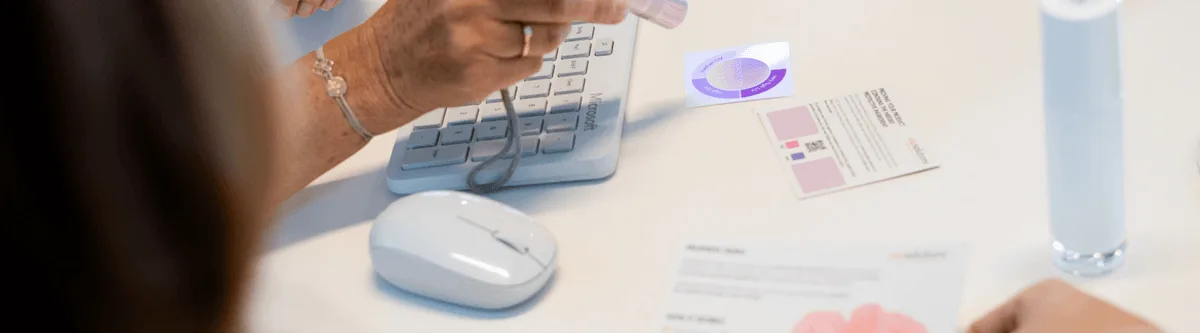
We use demo kits as a tangible risk-control system. By including calibrated tools, clear setup instructions, and specific do-and-don’t examples to minimise execution gaps.
3. Embed a proof-first approach
Claims without visible cause-and-effect proof are often met with scepticism. We build our demos to achieve reliable, evidence-based outcomes first, then communicate the insights visually.
4. Measure replication rate
One of the most reliable indicators of demo success is replication rate, the percentage of teams and conditions under which the demo can deliver consistent results. Demos with high engagement but low replication aren’t scalable.

Metrics that matter
Replication stands out as the single most actionable demo metric. A consistent replication rate of 90% or above across markets and operators signals readiness for scale.
Takeaway
Building scalable demos isn’t just about avoiding failure; it’s about designing for reliability. If you must ask, “Can this demo work anywhere, or just in perfect conditions?”, it’s time to revisit the execution model.
Designing the next demo for reliability, not theatre
Most demo failures we see in the field are not about the science they are about the conditions the demo is asked to survive. Heat in a Gulf trade-show booth, hard water in a Mumbai pharmacy, a hurried two-minute slot in front of a category buyer, a rep who has trained for ninety seconds rather than ninety minutes. A demo that quietly handles all four is worth ten that only sing in a controlled lab.
That is why we now stress-test every USP demo against three deliberately uncomfortable scenarios before sign-off: a non-expert operator, a hostile environment, and a tight time-box. Demos that pass go into the field with confidence. Demos that wobble go back into the studio for a second pass. The discipline costs a few days at the front of a project and saves weeks of firefighting once the activation is live.
How to diagnose a failing demo in your own portfolio
The fastest diagnostic is to pull the demo into a room and try to break it. Run it three times in a row with different people performing each take, in different lighting, with slightly different dosing. If the result holds across all three, the demo is fundamentally sound and the problem is probably how it is being briefed into channels. If it drifts, the problem is the demo itself, and no amount of better creative will fix it downstream. This single 30-minute exercise saves teams from spending another quarter chasing the wrong root cause.
Once the diagnosis is clear, fix the demo at its weakest link before reshooting anything. If it depends on a steady hand, redesign the applicator. If it depends on perfect lighting, redesign the prop to read in mixed light. If it depends on the consumer noticing a subtle difference, increase the contrast in the indicator so the change is unmissable. The redesign almost always costs less than a single round of content production, and it pays back across every channel the demo will eventually appear in.