
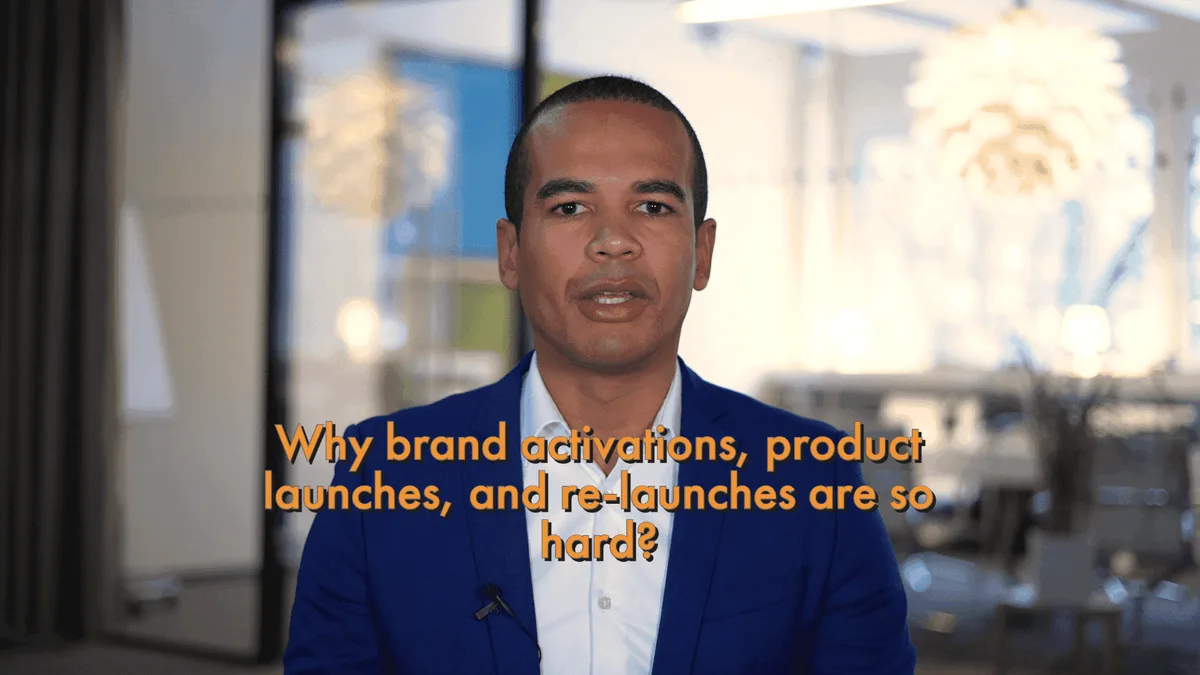
In this article: the three times USP Demo Solutions delivers value to a beauty brand from a single engagement - across activations, product launches and re-launches.
Embedded Vimeo video is blocked
It stays hidden until you accept embedded media cookies.
Brands that work with USP Demo Solutions tell us we deliver value in three distinct ways at the same time, and they often want to use one engagement to get all three. Understanding that structure helps marketing and R&D leaders brief us better.
1. Activation value
At the activation layer we provide the demo tools and trained protocols that make a campaign tangible in store, at events and in social content. This is what gives a beauty advisor or an influencer something to show, not just talk about. Examples include indicator cards, hydration testers, scalp sebum sensors and shade finders that survive heavy daily use.
2. Launch value
For a new product, our work begins much earlier in feasibility, claim substantiation and demo design alongside the R&D dossier. By the time the product reaches launch, the supporting demo is already validated, manufacturable at scale and aligned with the lead claim, which shortens the path to first-sell-through.
3. Re-launch value
Mature SKUs often need a credibility refresh more than a reformulation. We help brands re-launch existing products with a sharper, more visual proof point that re-establishes relevance with new consumer cohorts. A small demo upgrade can extend the commercial life of a hero SKU by years.
To see how these three layers play out across categories, browse our demo library or read about our five-step demo creation process.
How to brief us to unlock all three layers
If you want a single engagement to deliver activation, launch and re-launch value, structure the brief in three parts from the beginning. State the activation moment you want to win first, the launch claim you need to prove second, and the re-launch story you want to revisit the asset for in 12 to 18 months. With those three time horizons on the page, the demo is engineered to flex across all of them, instead of being optimised for one and retrofitted for the others.
The practical next step is to bring activation, brand and CRM owners into the same kickoff. Most of the value loss in demo programmes comes from these three teams briefing the same asset separately, which produces three slightly different demos and triples the cost. A single kickoff with a single demo brief that names all three horizons usually saves more than it costs in agency time alone, and it is the single biggest predictor of whether the asset is still in use a year after launch.
It is also worth scheduling a short review at six and twelve months after the asset goes live. The activation and launch value are usually visible within the first quarter, but the re-launch value only shows up when the asset is reused for a new claim, a new market or a new channel. Putting those review dates in the calendar at kickoff makes sure the asset is genuinely revisited rather than quietly retired, which is where most of the compounding value of a well-designed demo gets lost in practice.
The wider implication is for budget planning. Treating activation, launch and re-launch as three separate line items, each with its own agency and its own asset, typically costs two to three times more than commissioning a single demo programme designed to flex across all three. Brands that consolidate the budget under one demo brief usually free meaningful spend that can either be reinvested in higher-quality production or returned to the bottom line, depending on the year's priorities.